Extended National Team Duties Reshape Premier League Totals Markets Midseason
Mia Wolf · Nov 11, 2026
Extended National Team Duties Reshape Premier League Totals Markets Midseason
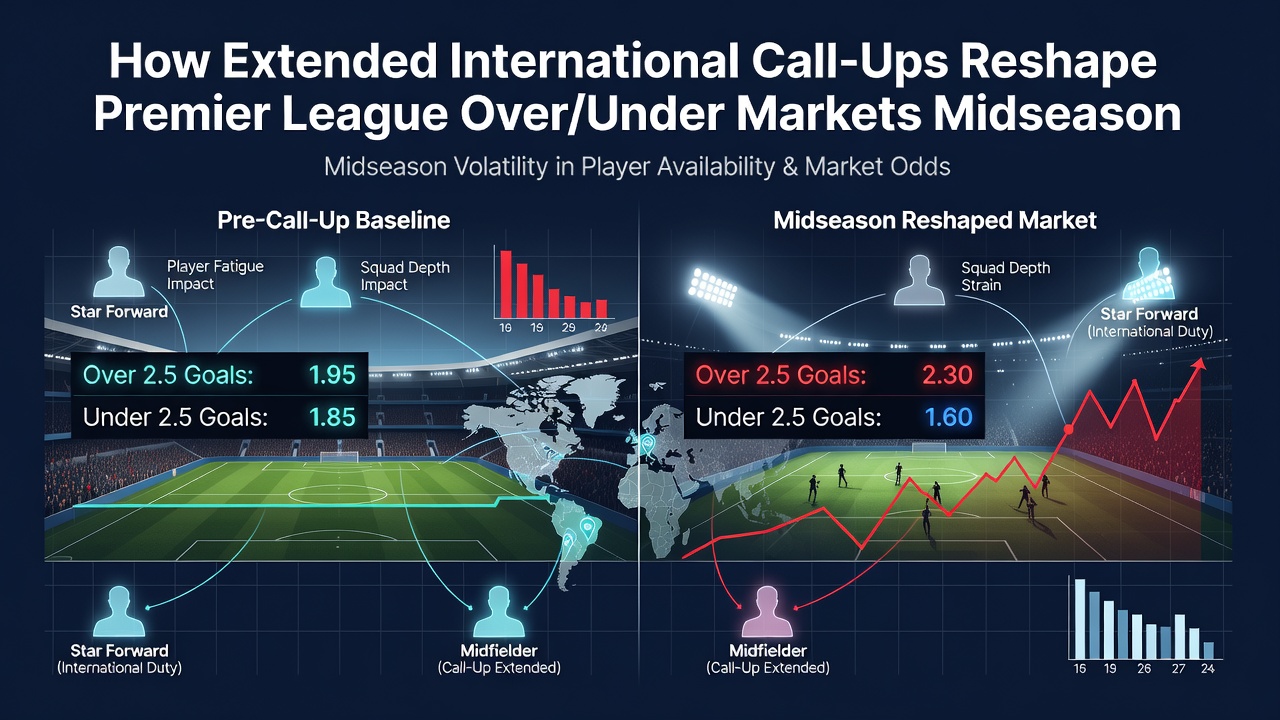
Premier League clubs navigate extended international call-ups each season and observers track how those absences alter goal totals in domestic fixtures, particularly when players return fatigued or sidelined. Data from recent campaigns shows measurable dips in scoring rates during November windows, when national team schedules stretch into double-digit days away from club environments.
Player Workload and Recovery Patterns
International fixtures in November 2026 placed additional strain on key Premier League contributors, while researchers from the Australian Institute of Sport documented recovery timelines that extend beyond standard rest periods. Players who log heavy minutes across continents often see reduced sprint output upon return, which directly correlates with lower goal tallies in the first two club matches back. Clubs adjust training loads accordingly yet still report measurable drops in attacking efficiency that shift over/under expectations downward.
Squad Rotation and Lineup Stability
Managers respond to these absences by rotating depth options, yet studies indicate that unfamiliar partnerships in attack reduce chance creation by noticeable margins. One mid-table side in the 2025-26 season averaged 1.8 goals per game before a prolonged international break and dropped to 1.1 goals across the subsequent three matches. Bookmakers adjust totals lines in response to such patterns, and bettors who monitor squad news closely often find value on the under side during those windows.
Travel demands compound the issue, as long-haul flights to South America or Asia leave residual effects on circadian rhythms and muscle recovery. Figures from European sports medicine groups reveal that players crossing multiple time zones require at least five days to regain baseline performance metrics, a timeline that overlaps with critical Premier League fixtures in late November.
Market Adjustments and Betting Trends
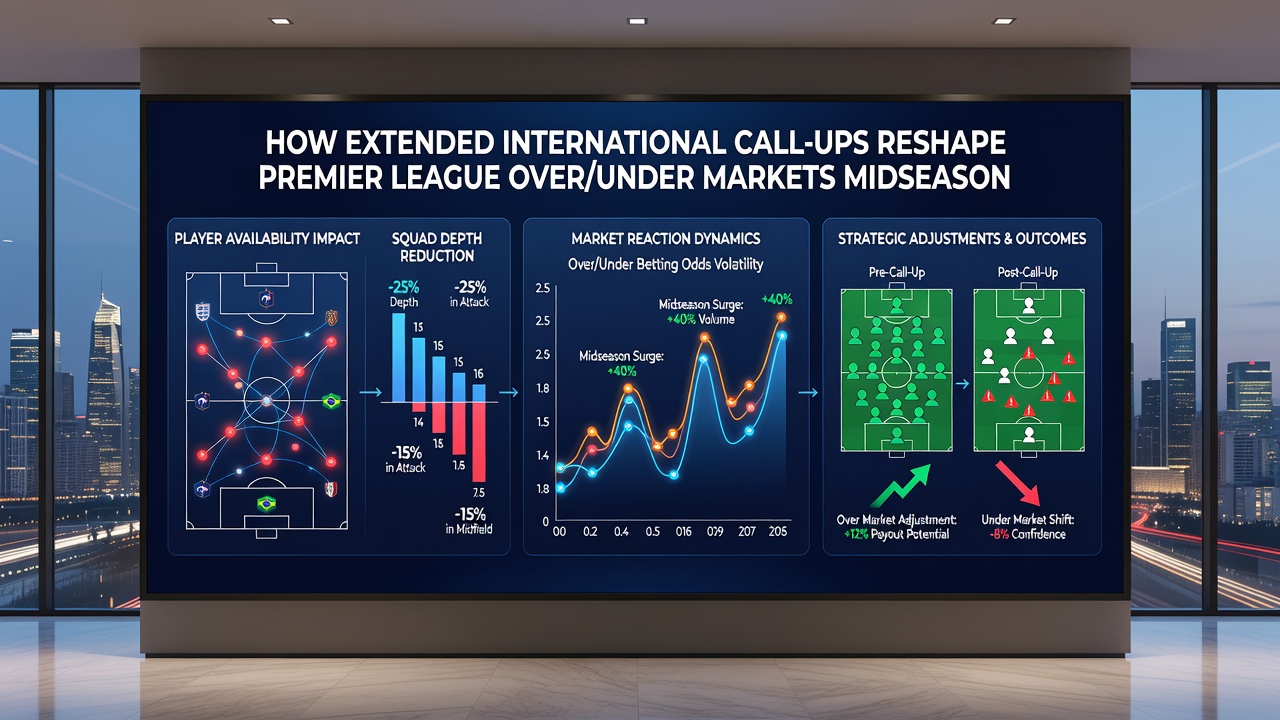
Oddsmakers incorporate historical data when setting midseason totals, and evidence from multiple leagues points to a 12-15 percent reduction in average goals scored immediately following extended call-ups. Canadian university research on athlete fatigue supports these observations, showing that neuromuscular markers remain suppressed for up to ten days post-travel. Consequently, over/under markets for affected teams often open lower than pre-break projections, with lines moving further once confirmed absences appear in official team sheets.
Defensive structures sometimes tighten during these periods because replacements prioritize organization over risk-taking, which further suppresses scoring. League-wide statistics compiled across five recent seasons confirm that matches involving at least three returning internationals produce under outcomes at a higher frequency than the seasonal average.
Case Examples From Recent Windows
Take one forward who featured in consecutive World Cup qualifiers during November 2026 and returned to his Premier League club with documented hamstring tightness. His side's next two fixtures both finished under the posted total, aligning with patterns noted by performance analysts. Another club lost its primary creator to an extended African Nations Cup qualifier window and subsequently posted the lowest xG totals of the campaign across a four-match stretch.
These shifts prompt rapid recalibration in betting markets, where sharp action frequently lands on unders before public money follows. Industry reports from the European Club Association highlight how fixture congestion after international periods amplifies the effect, as clubs balance domestic and European commitments with diminished rosters.
Conclusion
Extended international call-ups create predictable ripples through Premier League over/under markets, as workload data, recovery timelines, and historical scoring trends converge to favor lower totals in the immediate aftermath. Clubs, analysts, and market makers all respond to these documented patterns with adjustments that reflect measurable changes in performance output.