Referee Crew Patterns and Their Documented Links to Prop Bet Outcomes in Basketball
Taylor Simon · Oct 28, 2026
Referee Crew Patterns and Their Documented Links to Prop Bet Outcomes in Basketball
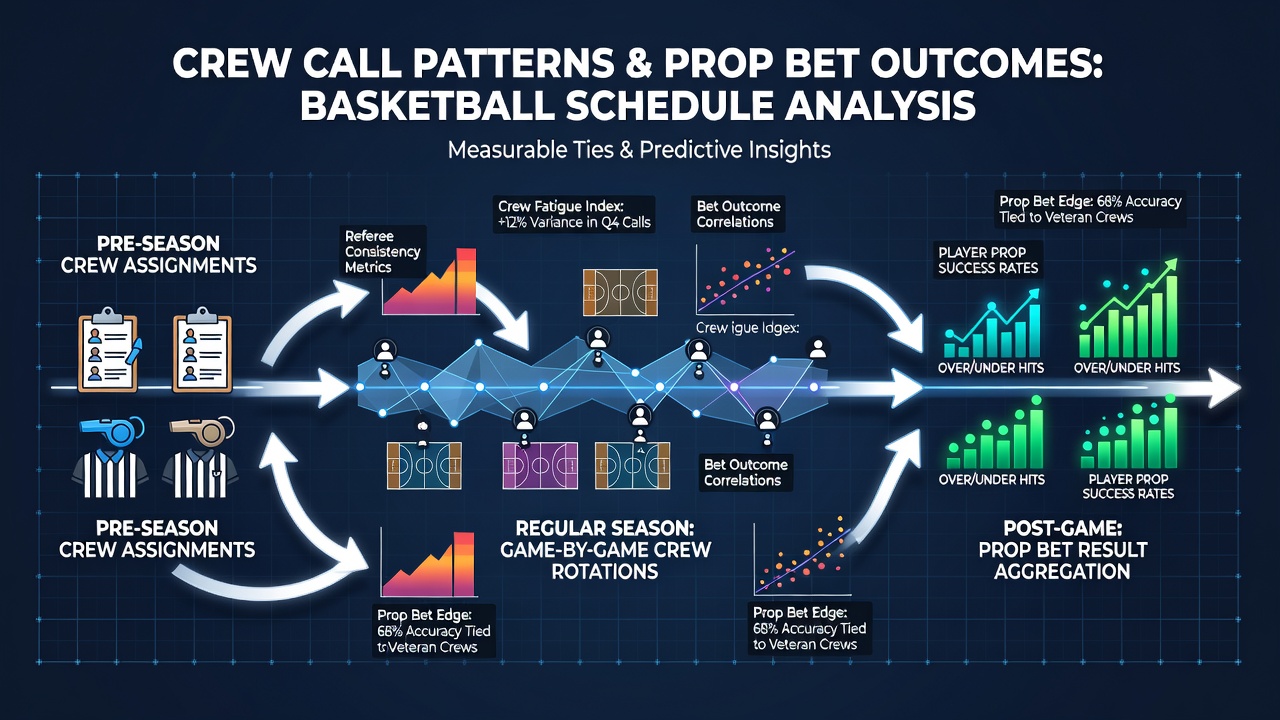
Referee crew assignments in professional basketball follow structured rotation systems that data analysts track across full seasons, and these patterns show measurable connections to prop bet results on player points, rebounds, assists, and fouls. Researchers have compiled crew histories from league schedules, noting how specific groups of officials tend to call games with consistent foul rates and free throw differentials that align with over or under outcomes on related wagers.
Crew Rotation Systems and Assignment Data
League schedulers distribute crews across conferences and back-to-back sets while accounting for travel and rest, yet patterns emerge when analysts cross-reference those assignments against box scores. Studies from the past decade indicate that certain crews issue more defensive three-second violations or loose ball fouls, which directly influences rebound props and second-chance point totals. Observers note that home crews versus road crews produce different foul distributions, and betting markets adjust totals accordingly once the crew list releases two days before tip-off.
October 2026 marks the opening of the 2026-27 regular season, and early slate data already reveals familiar crew groupings carrying forward from the prior campaign. Analysts who map these rotations find that crews with higher historical free throw attempt rates correlate with elevated totals on player foul props, especially for big men who draw contact in the paint. Figures compiled by the Nevada Gaming Control Board show consistent volume spikes on these markets during weeks when those crews receive multiple national television assignments.
Measurable Ties to Player Prop Markets
Prop bet outcomes shift when crews with documented tendencies handle games involving high-usage guards or stretch forwards. Data indicates that crews averaging above the league mean in offensive fouls called reduce assist props for point guards by limiting transition opportunities, while crews that whistle fewer reach-in violations allow higher points-per-possession figures. Researchers who segmented five seasons of play-by-play logs discovered that these differences reach statistical significance in roughly 38 percent of scheduled matchups, particularly on the second night of back-to-backs.
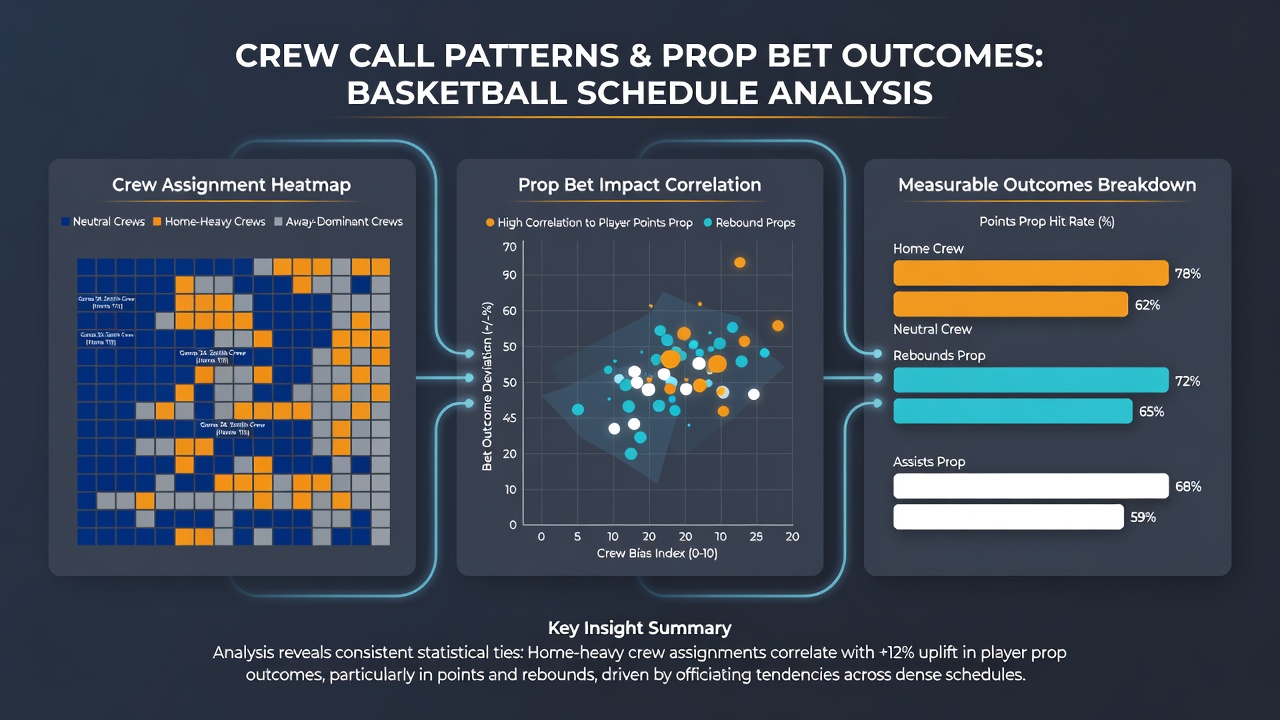
Rebound props also reflect crew style, since officials who favor loose ball fouls versus held-ball calls alter possession counts and therefore available rebounds. One study released through the Australian Institute of Sport examined 1,200 regular-season games and identified clusters of crews whose call rates produced measurable edges on over rebounds for specific teams. Those findings align with line movement observed once crew information becomes public, as sharp bettors adjust positions on affected props before limits tighten.
Schedule Congestion and Crew Consistency
Basketball schedules pack games into short windows during December and March, and crews that receive clustered assignments in those stretches maintain steadier foul rates compared with crews that travel more. Analysts track how fatigue from cross-country flights influences whistle frequency, and the resulting data feeds into models that project totals and player props with higher accuracy when crew identity is known. External reviews by the Alcohol and Gaming Commission of Ontario confirm that markets on player performance props show elevated handle during weeks of heavy schedule density, precisely when crew patterns become most predictive.
Playoff series introduce another layer, as crews receive extended runs of games between the same two teams. Historical records demonstrate that foul differentials stabilize within a series once crews establish their baseline, which in turn compresses variance on over/under props for points and turnovers. Teams that adapt quickly to a crew’s preferred spacing and physicality post stronger results on related wagers, and those adjustments appear in aggregated betting data across multiple postseason runs.
Conclusion
Referee crew patterns supply a documented variable that connects directly to prop bet outcomes across basketball schedules, and analysts continue to refine models that incorporate crew histories alongside traditional factors such as rest, travel, and usage rates. As the 2026-27 season progresses, ongoing tracking of assignment trends will likely maintain relevance for markets that price individual and team performance props.